About me
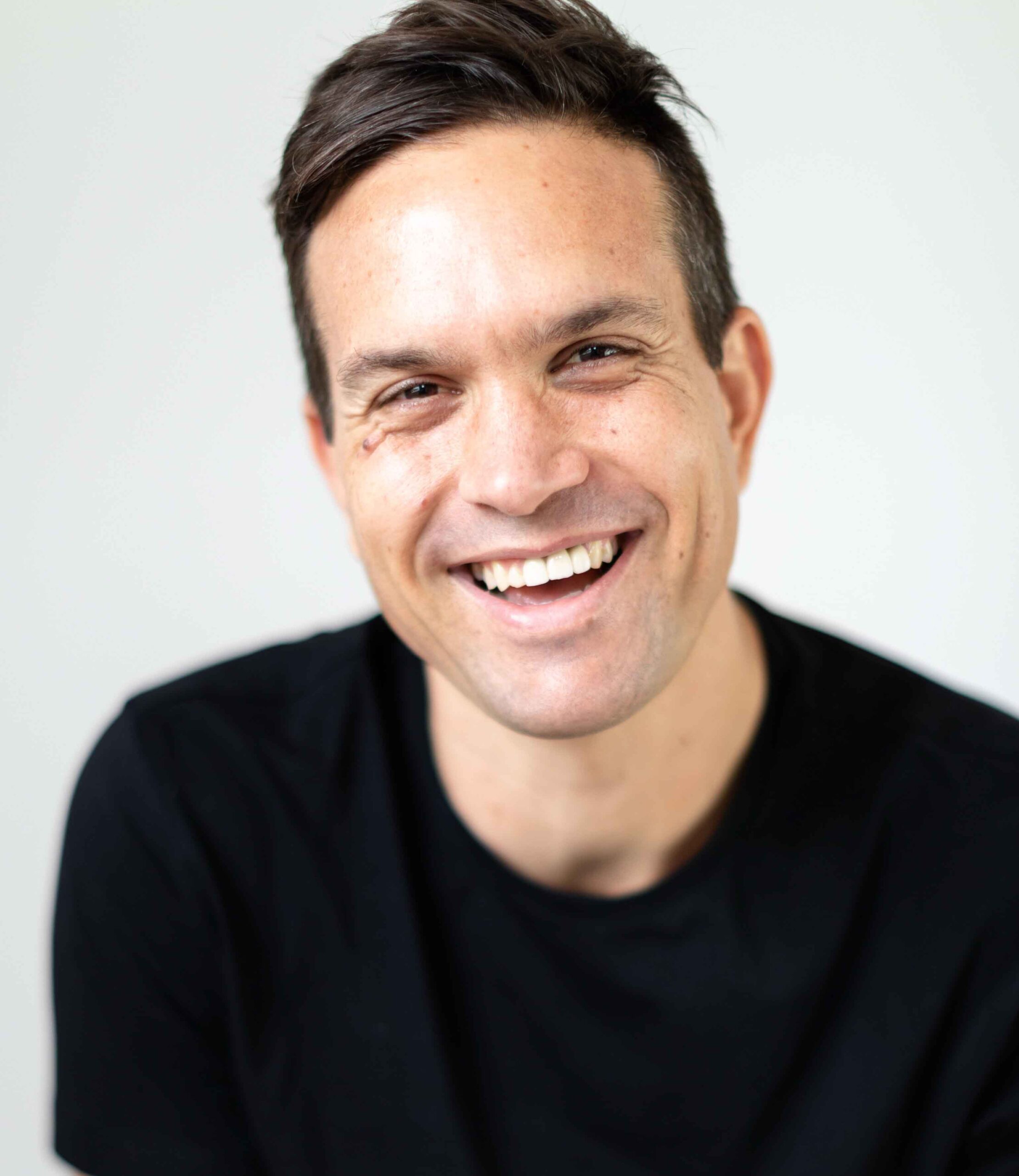
I am a chiropractor and interdisciplinary pain management specialist in Hillcrest.
I qualified in 2009 and I have spent most of the time since trying to understand pain properly. That started as frustration, because I kept seeing two people with the same scan, the same job and the same injury, one back at work in six weeks and the other still off a year later, and nothing I had been taught explained the difference between them.
So I went back to study, first a three-year certificate in pain science from 2014 and then a postgraduate diploma at UCT, both of them taught alongside doctors, physiotherapists and psychologists rather than inside chiropractic.
MTech Chiro (DUT) · PG Dip Interdisciplinary Pain
Management (UCT)
AHPCSA A10852 · CASA 0354740
Most chiropractic training is built around finding the tissue at fault and treating it, and that works well for a sprained ankle. It runs out of road with a back that has hurt for two years, where whatever started it healed a long time ago and something else is keeping it going.
I qualified from Durban University of Technology in January 2009, then worked in Ladysmith and Vryheid, then Westville, before moving to Hillcrest in 2019.
By about halfway through that first decade I had stopped asking which technique to use and started asking why the same injury lands two people in completely different places a year later. The honest answer, and it took me a while to accept it, is that most of what decides the outcome is not in the tissue at all. It is in how much of it you understand, how frightened you are of moving, how you are sleeping, and what is going on around you at work and at home.
That is what the pain qualifications are for, and it is why the first thing I do in a consultation is explain what I think is happening rather than reach straight for the table.
Most of what decides whether someone recovers does not sit in the tissue.
Qualifications
Three qualifications over eighteen years, each one narrowing towards the same subject.
I am registered with the Allied Health Professions Council of South Africa and the Chiropractic Association of South Africa. Both registers are public, and both of my numbers are below so that you can check them.
Durban University of Technology · 2009
A six-year full-time programme covering anatomy, physiology, pathology, diagnosis, radiology and clinical practice, with a research dissertation and supervised clinical hours.
Train Pain · 2014 to 2017
Three years of contemporary pain science and how to apply it clinically, taught to practitioners from several different disciplines.
University of Cape Town
Pain neuroscience, the psychological and social contributors to persistent pain, and multidisciplinary management, all built on the biopsychosocial model. This is the qualification that shapes how I work day to day.
Check this yourself
The Allied Health Professions Council of South Africa keeps a public register of everyone licensed to practise in this country, so you can look me up in about a minute. Search the number below, or just the surname Cuninghame, at ahpcsa.co.za.
AHPCSA registration
Allied Health Professions Council of South Africa. Legally required in order to practise.
CASA membership
Chiropractic Association of South Africa.
The same check works for anyone you are thinking of seeing, and it is worth doing. Anyone treating you in a regulated allied health profession in South Africa should be on that register, and if a practitioner will not give you their number, that has answered your question.
Not a medical doctor. In South Africa “Dr” is a professional courtesy title that reflects the doctoral-level qualification, in the same way dentists and several other professions use it. Chiropractors are first-contact practitioners, so you do not need a referral to see me, but I do not prescribe medication and I do not do surgery.
In practice that means anything to do with medication, prescriptions or dosages goes to your GP or your pharmacist, and I will send you there rather than offer an opinion in the room. The same applies when a problem turns out to sit outside my scope, which is a normal part of a first consultation and not a failure of one.
The straight version
A practice website is a sales document, so here is the part that usually gets left out. These are five things I will say to you at a first consultation, and one or two of them cost me work.
A 2015 review pooled the scans of 3,110 people with no back pain at all, and disc bulges turned up in 30 per cent of the pain-free 20 year olds and 84 per cent of the pain-free 80 year olds. So finding one on your report does tell me something, but it rarely tells me why you are sore this week, and being told your spine is crumbling does real harm to how much you are willing to move.
The PACBACK trial followed a thousand adults with recent back pain for a year, and a programme of education, exercise and activity guidance did better at preventing long-term disabling pain than spinal manipulation given on its own. I still use my hands, because it earns its place inside a plan, but it is not the plan.
The shape you hold is a weak predictor of pain, whereas how long you hold it without changing is a much better one. Nobody needs to be taught to sit up straight, and most people simply need permission to get up more often.
Including shockwave, which I own and charge for. It can bring the pain down enough to let you start loading sooner, which is worth a great deal, but it does not replace the twelve weeks of progressive work that actually changes a tendon.
A fair part of a first consultation is ruling things out, so if what you have needs a GP, a specialist, a physiotherapist or a psychologist, I will tell you at that visit rather than treat around it for six weeks first.
Professional service
In South Africa that sits with the Professional Board for Chiropractic and Osteopathy, under the Allied Health Professions Council, and I was appointed to its Internship Committee this year.
We screen the portfolios of chiropractors finishing their training and we run their exit interviews, which means reading their case work and then sitting across a table from them before they are signed off to practise.
It is not a marketing credential. It is a job your own profession asks you to do.
I have also been an external moderator at Durban University of Technology, for Clinical Chiropractic and Biomechanics and for Chiropractic Principles and Practice.
Speaking and teaching
I get asked to speak at congresses and branch meetings across chiropractic, biokinetics and massage therapy, and the subject is almost always pain: how it works, why it persists in some people and settles in others, and what actually changes it.
| Date | Event | Talk |
|---|---|---|
| June 2024 | Massage Therapy Association of South Africa Conference | A mechanisms-based approach to pain |
| October 2023 | Chiropractic Association of South Africa, KZN Branch | Pain, the brain, and movement. Clinical considerations for practice |
| September 2023 | Biokinetics Association of South Africa, Life Through Movement Regional Conference | Pain. Clinical considerations in rehab |
| April 2021 | World Congress of Chiropractic Students, African Regional Congress | Lower back pain. The painful truth |
| September 2019 | Chiropractic Association of South Africa Annual Congress | Pain. A mechanisms-based approach |
| November 2018 | Chiropractic Association of South Africa, KZN Branch | Neuroscience in modern practice. A paradigm shift |
Teaching colleagues keeps me honest, because a room full of practitioners will find the soft spot in an argument a lot faster than any patient will.
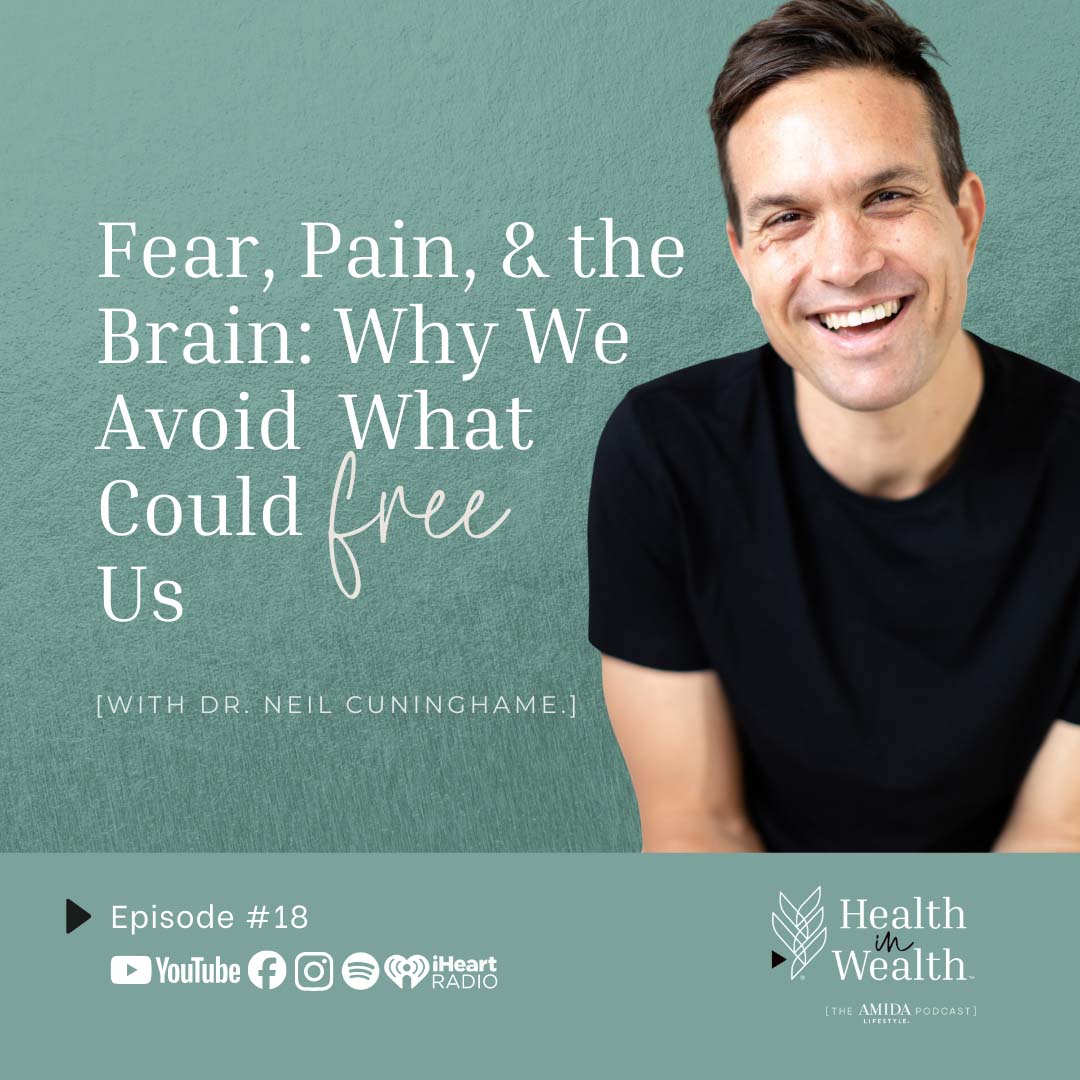
▶I joined the Health in Wealth podcast to talk about why fear keeps people stuck in pain, and how understanding the brain's role in it can help set them free. I have also written Unstuck, a workbook on graded exposure, along with the condition guides on this site.
Sport
I raced sprint kayaking for South Africa from 2000 to 2003, at junior and then senior level, on the world cup and world championship circuit, and that was my first education in training load.
Kayaking teaches you early that a body has a ceiling, that the ceiling moves if you are patient with it, and that pushing through the wrong kind of pain costs you a season. I have needed reminding of that in my thirties, and again in my forties.
Since then, roughly in order of how much they hurt: multiple marathons, Two Oceans most recently in 2025, the full-distance Ironman African Championship in 2022, Sani2C non-stop twice, Trans Baviaans five times, the Knysna Extreme Triathlon in 2024, and Comrades in 2026 in the colours of Hillcrest Villagers Athletic Club. And a long tail of smaller races that nobody remembers except the people who were there.
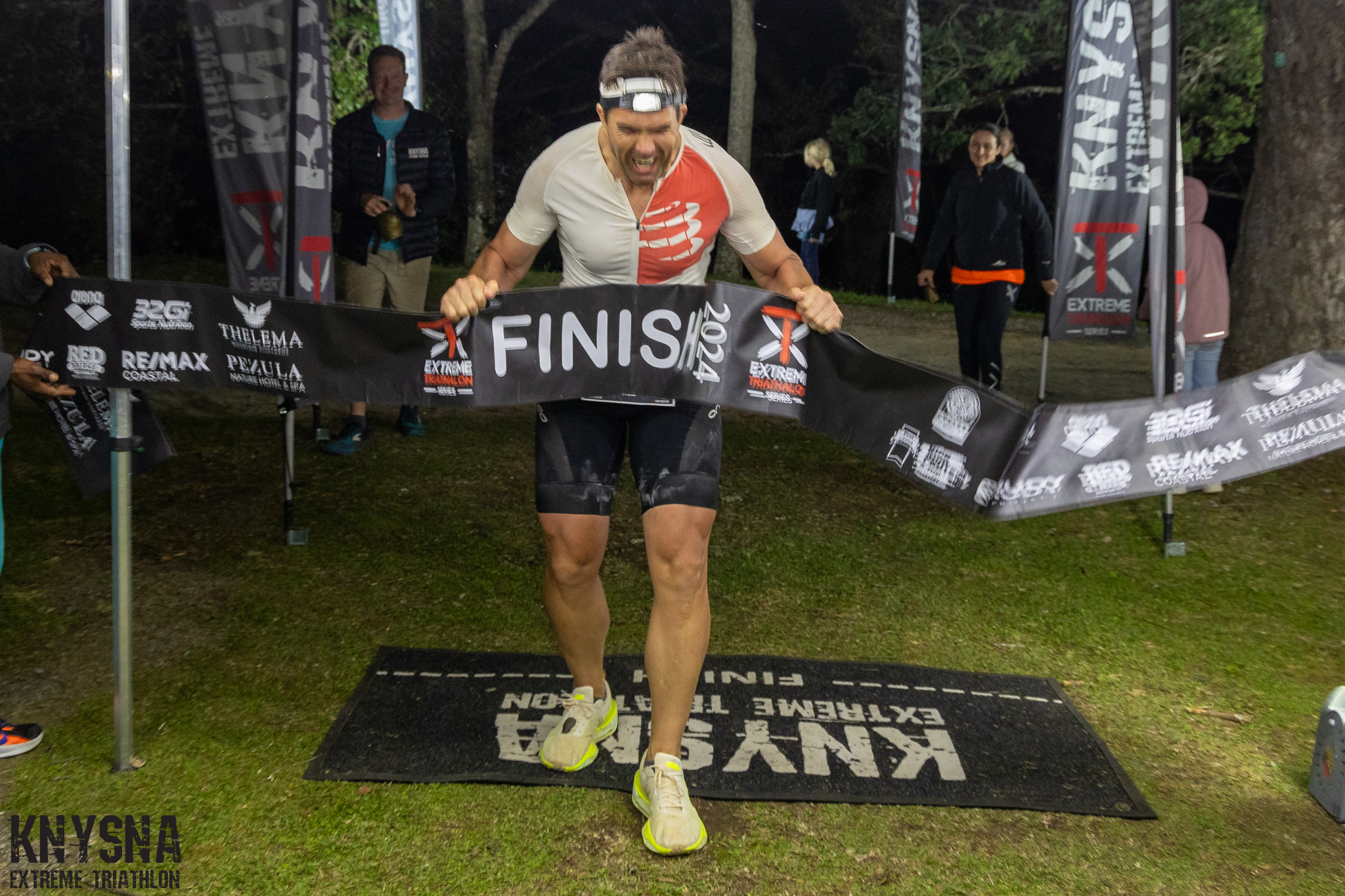
Knysna Extreme Triathlon, 2024
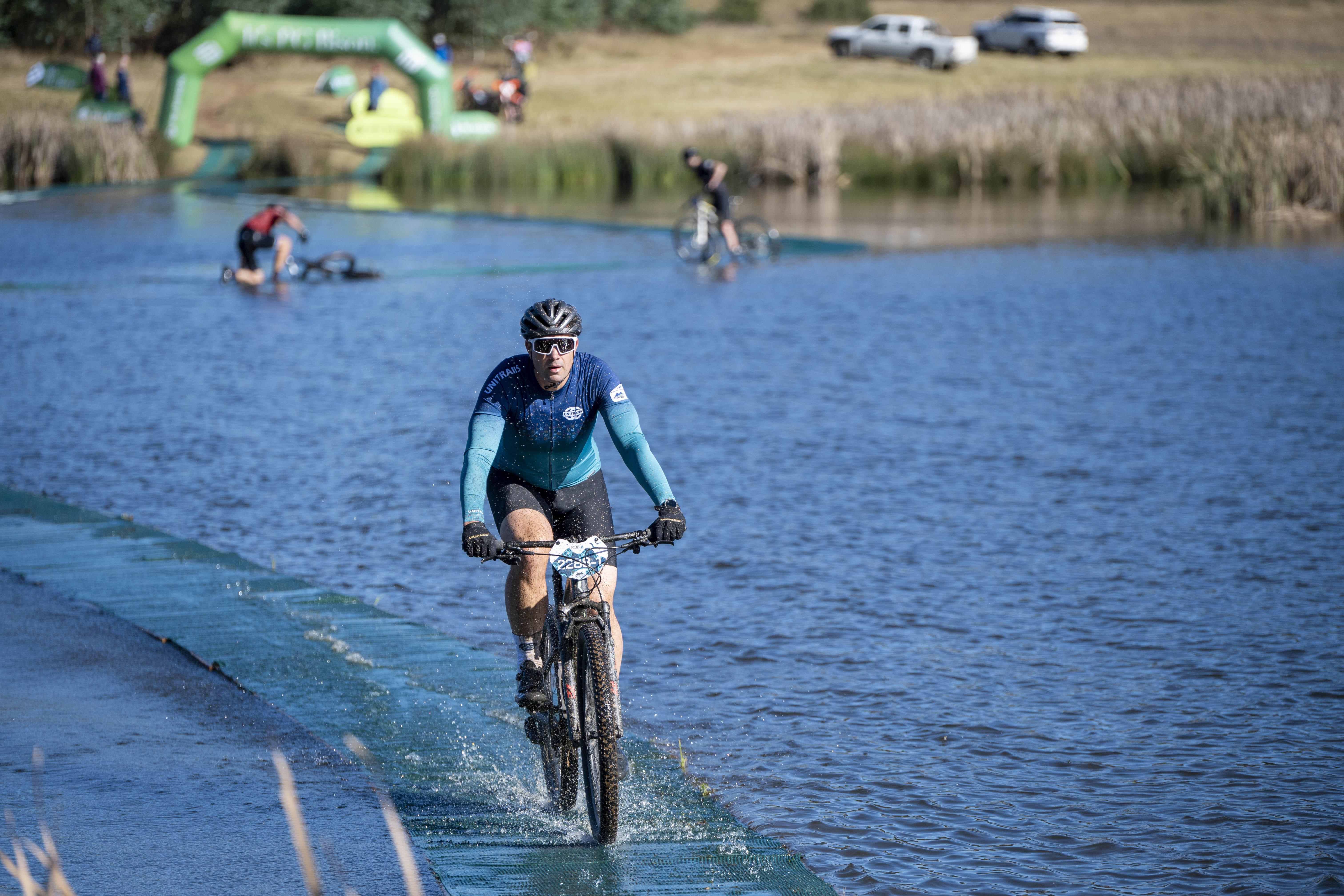
Sani2C
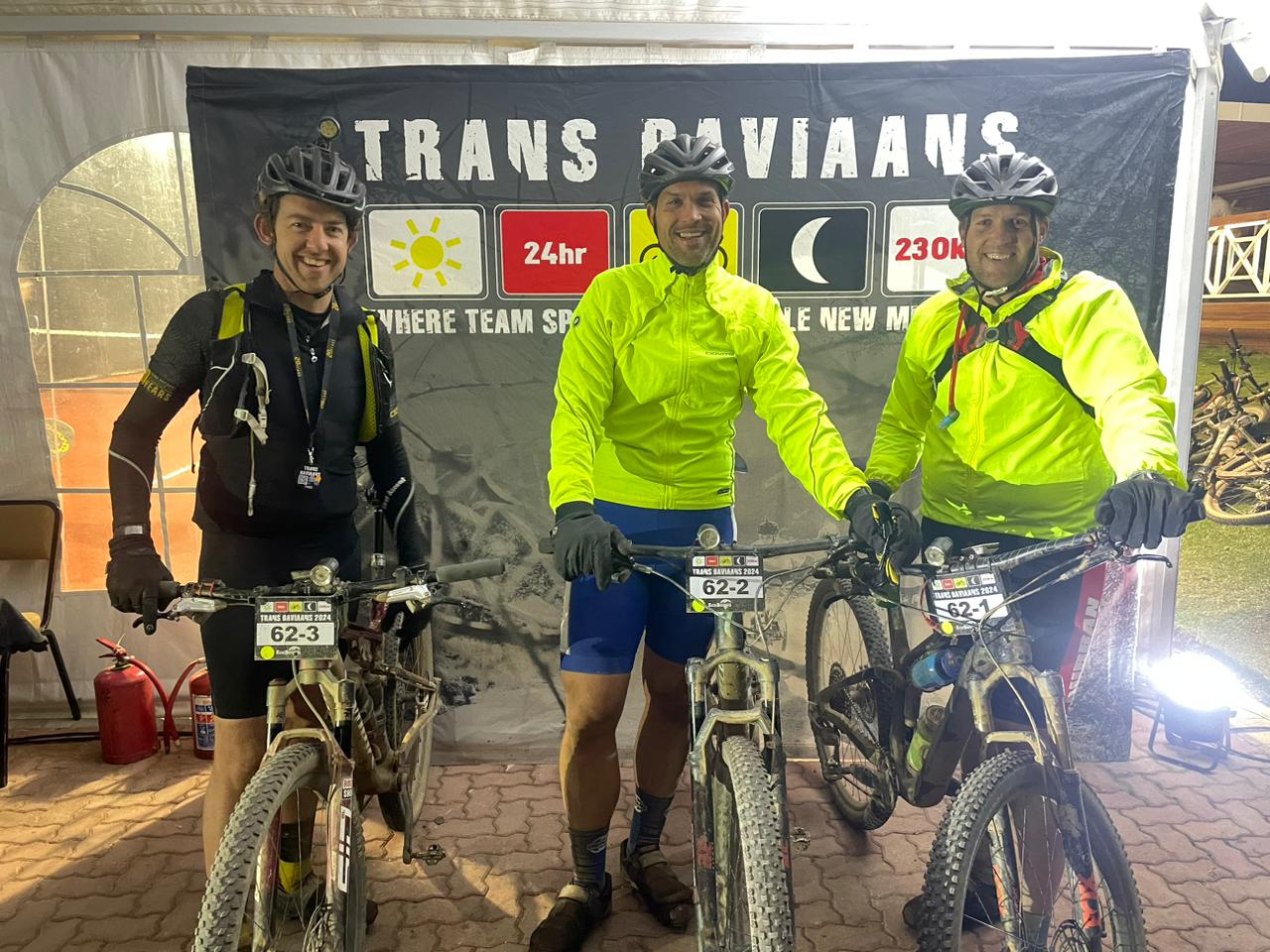
Trans Baviaans, 2021-2026
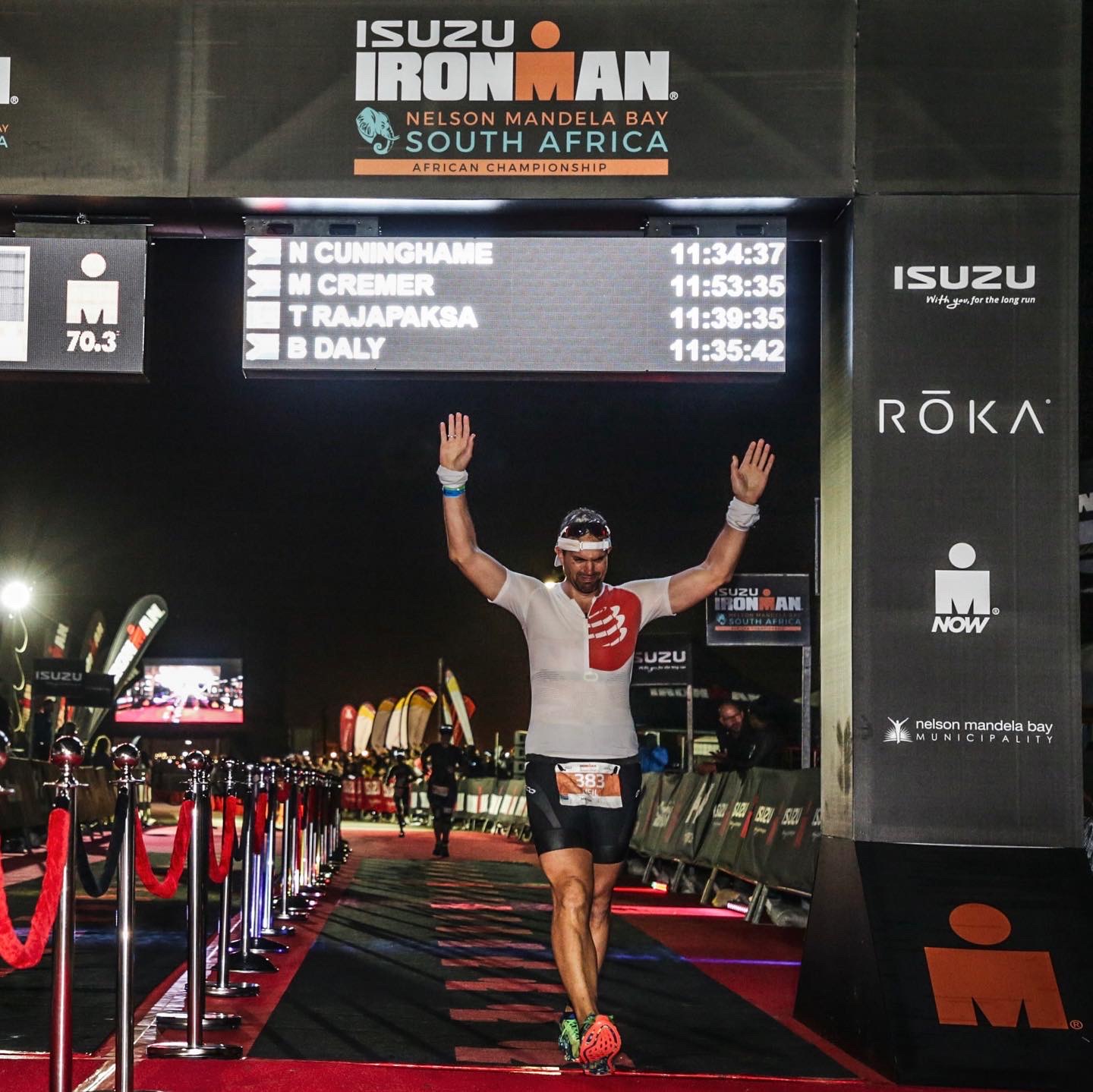
Ironman African Championship, 2022
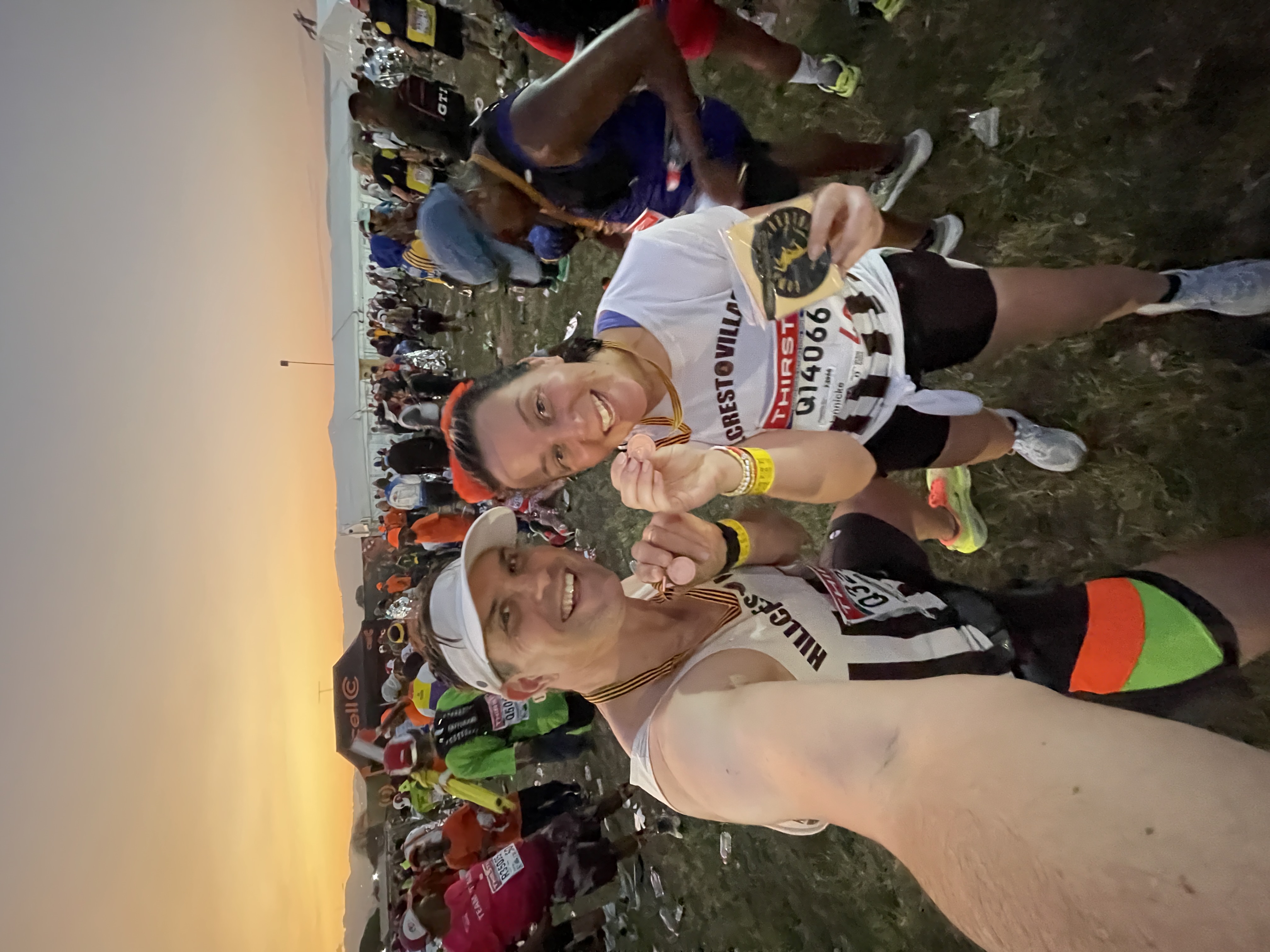
Comrades Marathon, 2026
I have fractured an elbow coming off a mountain bike and carried on riding, and I have run on a stress fracture of my hip because there was a big event coming up and I did not want to hear what my hip was telling me. It took months to settle and I missed the event anyway.
Neither was a good decision, and both were made for reasons that will be familiar to anyone who has trained seriously for something. It is also why you will not get lectured in here. Ignoring your own good advice is a common condition, and it responds a great deal better to a workable plan than to a telling-off.

Get started
A first consultation runs 45 to 60 minutes, at Meyrickton Park in Hillcrest, and you do not need a referral to come and see me. Same-week appointments are usually available, and if you would rather ask a question before you book, the WhatsApp number below comes straight to me.
Phone 031 035 1165 · WhatsApp 064 820 5203
A1a Meyrickton Park, 2 Meyrickton Pl, St Helier, Hillcrest, 3610
Dr Neil Cuninghame · MTech Chiro (DUT) · PG Dip
Interdisciplinary Pain Management (UCT) · AHPCSA A10852 · CASA 0354740
Last reviewed: 4 August 2026
This page is general information and is not a substitute for personalised medical advice. Always consult a healthcare provider about your specific condition.